
Introduction
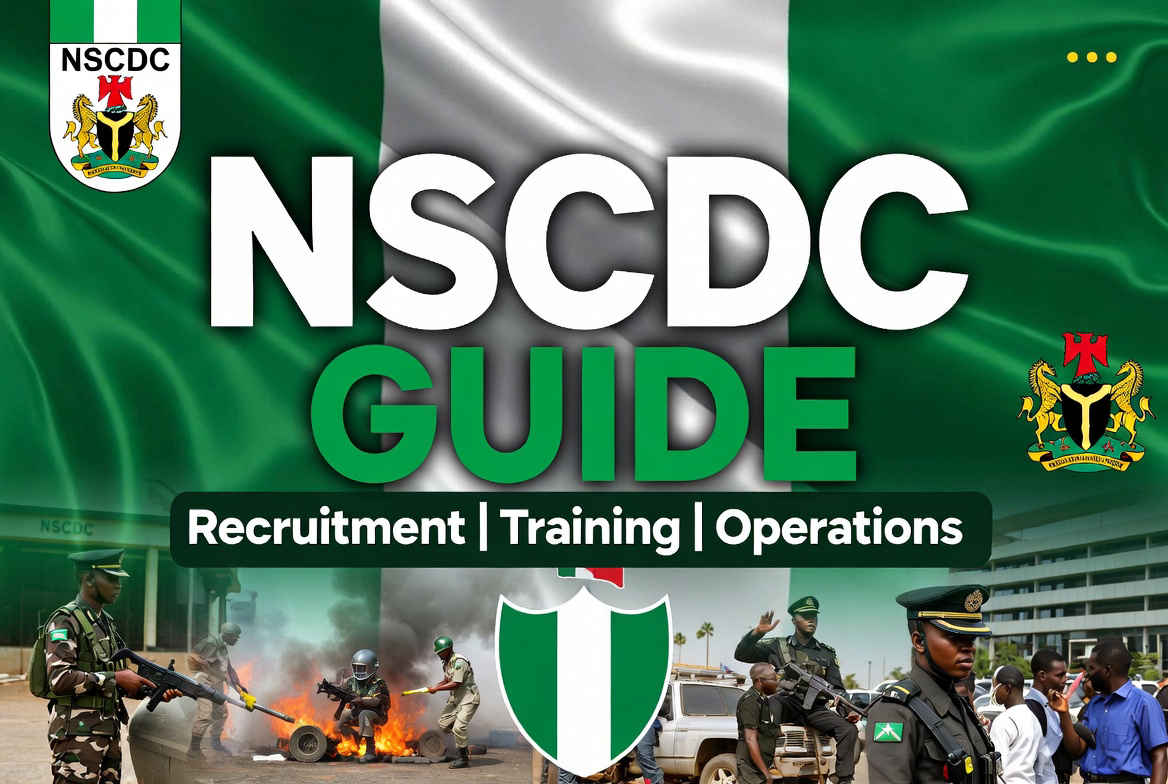
The Nigeria Security and Civil Defence Corps, commonly called NSCDC, is one of Nigeria’s major paramilitary agencies. It plays an important role in protecting lives, public infrastructure, communities, and national assets.
Many Nigerians search for information about the NSCDC because they want to understand its duties, learn about career opportunities, or know how recruitment works. However, misinformation about requirements, application dates, and recruitment portals is common.
This NSCDC guide explains what the Corps does, its legal foundation, major responsibilities, recruitment information, eligibility considerations, and practical advice for anyone interested in learning more about the agency.
What Is the Nigeria Security and Civil Defence Corps?
The Nigeria Security and Civil Defence Corps (NSCDC) is a federal paramilitary organization responsible for supporting internal security and protecting people and important national assets.
The Corps operates under the supervision of the Federal Ministry of Interior and works with other security and emergency-response agencies. Its responsibilities include infrastructure protection, disaster response, crime prevention, private security regulation, and community safety.
The NSCDC is not the same as the Nigerian Police Force or the Nigerian Army. Instead, it has its own legally defined responsibilities and often collaborates with other agencies during security operations and emergencies.
According to the Corps’ official information, its statutory foundation is connected to the NSCDC Act No. 2 of 2003 and the Amendment Act No. 6 of 2007.
History of the NSCDC
The Civil Defence organization in Nigeria began as a voluntary security and emergency-support initiative during the Nigerian Civil War period. Over time, it developed into a more structured organization with wider responsibilities.
The organization later received statutory recognition through legislation passed by the National Assembly. The legal framework helped establish its role in protecting lives, property, infrastructure, and the public during emergencies.
Today, the NSCDC operates across Nigeria’s 36 states and the Federal Capital Territory. Its work has expanded beyond traditional civil defence to include pipeline protection, private guard company regulation, safe-school initiatives, intelligence gathering, and emergency response.
What Are the Main Functions of NSCDC?
The functions of the NSCDC cover several areas of national security and public protection. Its role is especially important where communities, public infrastructure, and emergency services need additional support.
1. Protection of Critical National Infrastructure
One of the most important responsibilities of the NSCDC is protecting critical national assets and infrastructure.
These are facilities and systems that are essential to the country’s economy and daily life. Examples include:
- Oil and gas pipelines
- Electricity installations
- Telecommunications infrastructure
- Water facilities
- Railway infrastructure
- Government installations
- Strategic public facilities
Damage to these assets can affect businesses, transportation, electricity supply, communication, and public safety. The NSCDC works to prevent vandalism, theft, illegal activities, and other threats against such infrastructure.
2. Disaster Management and Emergency Response
The Corps supports emergency operations during natural and human-caused disasters.
Depending on the situation, its duties may include:
- Supporting rescue operations
- Assisting with emergency evacuation
- Protecting affected communities
- Helping coordinate emergency response
- Supporting relief activities
- Providing assistance during major incidents
Disasters may include floods, building collapses, industrial accidents, communal emergencies, and other events that threaten lives and property.
The NSCDC’s role is often performed in cooperation with other agencies responsible for emergency management and humanitarian assistance.
3. Crime Prevention and Intelligence Gathering
The NSCDC also contributes to crime prevention through surveillance, intelligence gathering, community engagement, and security operations.
Its personnel may collect information about security threats, suspicious activities, vandalism, and risks affecting public infrastructure.
Intelligence gathering helps security agencies identify potential problems before they become larger incidents. This makes cooperation between communities and security organizations important.
4. Regulation of Private Guard Companies
Another major responsibility of the NSCDC is the licensing, monitoring, and supervision of Private Guard Companies in Nigeria.
Private security companies provide guards for homes, offices, estates, businesses, and other organizations. The NSCDC helps ensure that such companies operate according to approved standards.
This responsibility includes monitoring private security operations and encouraging professionalism within the industry.
People or organizations seeking private security services should ensure that the company they engage operates lawfully and meets applicable regulatory requirements.
5. Pipeline and Environmental Protection
Nigeria’s oil and gas infrastructure is economically important, making pipeline protection a major national concern.
The NSCDC works against activities such as:
- Pipeline vandalism
- Oil theft
- Illegal bunkering
- Damage to energy infrastructure
- Other activities affecting critical assets
The Corps may work with other agencies and task forces to protect pipelines and reduce threats to national revenue and the environment.
6. Protection of Schools and Communities
The NSCDC is also involved in initiatives designed to improve the safety of schools and communities.
Safe-school protection is important because students, teachers, and school workers need a secure environment for learning. The Corps’ community-focused activities may include security coordination, early warning systems, and cooperation with schools and local stakeholders.
The official NSCDC website identifies school protection and community safety as part of its broader responsibilities.
7. Support During Public Events and Emergencies
The Corps may provide security and crowd-management support during major public events, official activities, and situations where additional personnel are needed.
Its responsibilities can include helping maintain order, protecting important facilities, and supporting other authorities during emergencies.
This does not mean that the NSCDC replaces every other security agency. Instead, it complements their work within its legal mandate.
What Are the Duties of an NSCDC Officer?
The daily duties of an NSCDC officer depend on the officer’s department, rank, assignment, and location.
A typical officer may be involved in:
- Guarding government or critical infrastructure
- Conducting patrols
- Monitoring security risks
- Supporting emergency response
- Gathering intelligence
- Protecting public facilities
- Working with other security agencies
- Enforcing relevant laws within the Corps’ mandate
- Participating in training and public safety activities
- Supporting community security initiatives
Some officers may work in operational roles, while others may serve in administration, information technology, investigation, logistics, training, legal services, medical support, or communications.
Therefore, joining the NSCDC does not necessarily mean every officer performs the same duties.
NSCDC Rank Structure and Career Opportunities
The NSCDC is a paramilitary organization with a structured rank system. Officers progress through ranks based on applicable regulations, qualifications, experience, training, and promotion procedures.
Career opportunities may exist in areas such as:
- General operations
- Critical infrastructure protection
- Disaster management
- Intelligence and investigation
- Private guard company regulation
- Administration
- Information technology
- Legal services
- Medical services
- Public relations
- Logistics
- Training and development
The specific entry positions and available vacancies depend on official recruitment announcements issued by the responsible authorities.
Applicants should never assume that every recruitment exercise offers the same positions or requirements.
NSCDC Recruitment: What Applicants Should Know
NSCDC recruitment is a popular opportunity for Nigerians interested in public service and paramilitary careers. However, recruitment exercises are not permanently open.
Recruitment announcements are normally issued through official government channels, especially the Civil Defence, Correctional, Fire and Immigration Services Board (CDCFIB) when recruitment into the relevant agencies is conducted.
The Ministry of Interior identifies recruitment into the NSCDC and other supervised paramilitary services as part of its responsibilities.
Is NSCDC Recruitment Always Open?
No. Recruitment is conducted when the government and the responsible recruitment authority announce an official exercise.
Applicants should not believe social media posts claiming that recruitment is open unless the information can be confirmed through official sources.
Recruitment dates, available positions, educational requirements, age limits, and application instructions may change from one exercise to another.
Where Should Applicants Check Recruitment Information?
Applicants should rely on:
- The official NSCDC website
- The official CDCFIB website
- Official Ministry of Interior announcements
- Verified government press releases
One recruitment portal used in an official 2025 announcement was the CDCFIB recruitment portal. However, applicants must always confirm the correct portal for the particular recruitment exercise rather than relying on old links.
General Eligibility Considerations
The exact requirements depend on the official recruitment advertisement. Applicants should carefully read the announcement before applying.
Requirements may include:
- Nigerian citizenship
- Relevant educational qualifications
- Meeting the stated age range
- Medical and physical fitness
- Good character and other conditions stated in the advert
- Possession of required documents
- Meeting position-specific conditions
These should not be treated as permanent rules because official recruitment guidelines may change.
Common Documents Applicants May Need
Depending on the recruitment exercise, applicants may be asked to provide information or documents such as:
- National identification details
- Educational certificates
- Birth declaration or age-related documentation
- Local government identification documents
- Passport photographs
- Application confirmation details
- Other documents listed in the official announcement
Applicants should provide truthful information and ensure that names and dates are consistent across their documents.
How to Apply for NSCDC Recruitment
When recruitment is officially announced, applicants should follow the instructions published by the responsible authority.
A general application process may involve the following steps:
- Visit the officially announced recruitment portal.
- Read the eligibility requirements carefully.
- Create an account if required.
- Complete the application form with accurate information.
- Upload the requested documents.
- Review the application before submission.
- Submit the form within the stated deadline.
- Print or save the application confirmation if instructed.
- Monitor official announcements for shortlisting, screening, or examinations.
Do not pay individuals who promise guaranteed employment, automatic shortlisting, or special treatment.
A genuine recruitment exercise should provide official instructions and clearly communicate its conditions.
How to Avoid NSCDC Recruitment Scams
Recruitment scams are a serious problem because many applicants are eager to secure government employment.
Be cautious of anyone who:
- Promises guaranteed recruitment
- Requests money for shortlisting
- Claims to have special access to senior officials
- Sends unofficial application links
- Requests sensitive information through suspicious accounts
- Announces recruitment before official confirmation
- Offers to “upgrade” an application for payment
Always confirm recruitment information through official government platforms.
Remember that paying a scammer does not increase your chances of being recruited. It may instead lead to financial loss or identity theft.
Important Skills for a Career in NSCDC
People interested in joining the Corps should develop qualities that are useful in public service and security work.
These include:
- Discipline
- Honesty
- Physical fitness
- Teamwork
- Communication skills
- Emotional maturity
- Respect for the law
- Problem-solving ability
- Basic computer knowledge
- Ability to work under pressure
- Willingness to serve communities
Educational qualifications are important, but personal conduct and professional attitude also matter in a paramilitary career.
Why the NSCDC Is Important to Nigeria
Nigeria depends on infrastructure such as electricity, telecommunications, transport networks, water systems, and energy facilities. When these assets are attacked or damaged, ordinary citizens and businesses suffer.
The NSCDC helps protect these systems and supports national security efforts. Its emergency-response role also helps communities during difficult situations.
The Corps is particularly important because it combines security duties with civil protection responsibilities. This allows it to support both infrastructure security and public safety.
Difference Between NSCDC and the Nigerian Police Force
The NSCDC and the Nigerian Police Force are both security organizations, but their mandates are different.
The Nigerian Police Force has broad responsibility for policing, crime investigation, law enforcement, and maintaining public order.
The NSCDC focuses strongly on civil defence, protection of critical infrastructure, disaster response, private guard company regulation, and other responsibilities assigned by law.
Although their duties may sometimes overlap, the agencies are separate organizations that cooperate when necessary.
Frequently Asked Questions
What does NSCDC stand for?
NSCDC stands for Nigeria Security and Civil Defence Corps. It is a federal paramilitary agency responsible for civil protection, infrastructure security, emergency response, and related national security duties.
Is NSCDC a military organization?
No. The NSCDC is a paramilitary agency, not part of the Nigerian Armed Forces. It operates under the Federal Ministry of Interior and performs duties established by law.
What is the main duty of NSCDC?
One of its main duties is protecting critical national assets and infrastructure. It also supports disaster response, crime prevention, private security regulation, and community safety.
Is NSCDC recruitment currently open?
Recruitment is not permanently open. Applicants should check official NSCDC, CDCFIB, and Ministry of Interior announcements for current recruitment information.
What qualifications are required for NSCDC recruitment?
Qualifications depend on the specific recruitment exercise and position. Applicants must follow the requirements stated in the official advertisement rather than relying on old social media posts.
Can women join the NSCDC?
Recruitment opportunities are subject to the official conditions and policies of each exercise. Applicants should consult the published recruitment guidelines for applicable eligibility requirements.
Where can I find the official NSCDC website?
The official NSCDC website provides information about the Corps, its mandates, services, announcements, and contact details. Applicants should use official government sources when checking recruitment information.
Does NSCDC protect pipelines?
Yes. Pipeline and critical infrastructure protection is one of the Corps’ important responsibilities, including efforts against vandalism and illegal activities affecting energy infrastructure.
Does NSCDC regulate private security companies?
Yes. The Corps licenses, monitors, and supervises Private Guard Companies in Nigeria under its regulatory responsibilities.
How can I avoid fake NSCDC recruitment websites?
Only use recruitment links announced through official government channels. Avoid unofficial agents, social media accounts promising guaranteed employment, and anyone requesting payment for recruitment assistance.
Conclusion
The Nigeria Security and Civil Defence Corps is an important part of Nigeria’s internal security system. Its responsibilities include protecting critical infrastructure, supporting disaster response, regulating private guard companies, preventing crime, and improving community safety.
Anyone interested in an NSCDC career should understand that recruitment depends on official announcements and changing requirements. The safest approach is to rely on verified government information, prepare honestly, and avoid individuals who promise guaranteed employment.
Understanding the NSCDC helps citizens appreciate its role in protecting lives, public assets, and the country’s essential services.





Leave a Comment